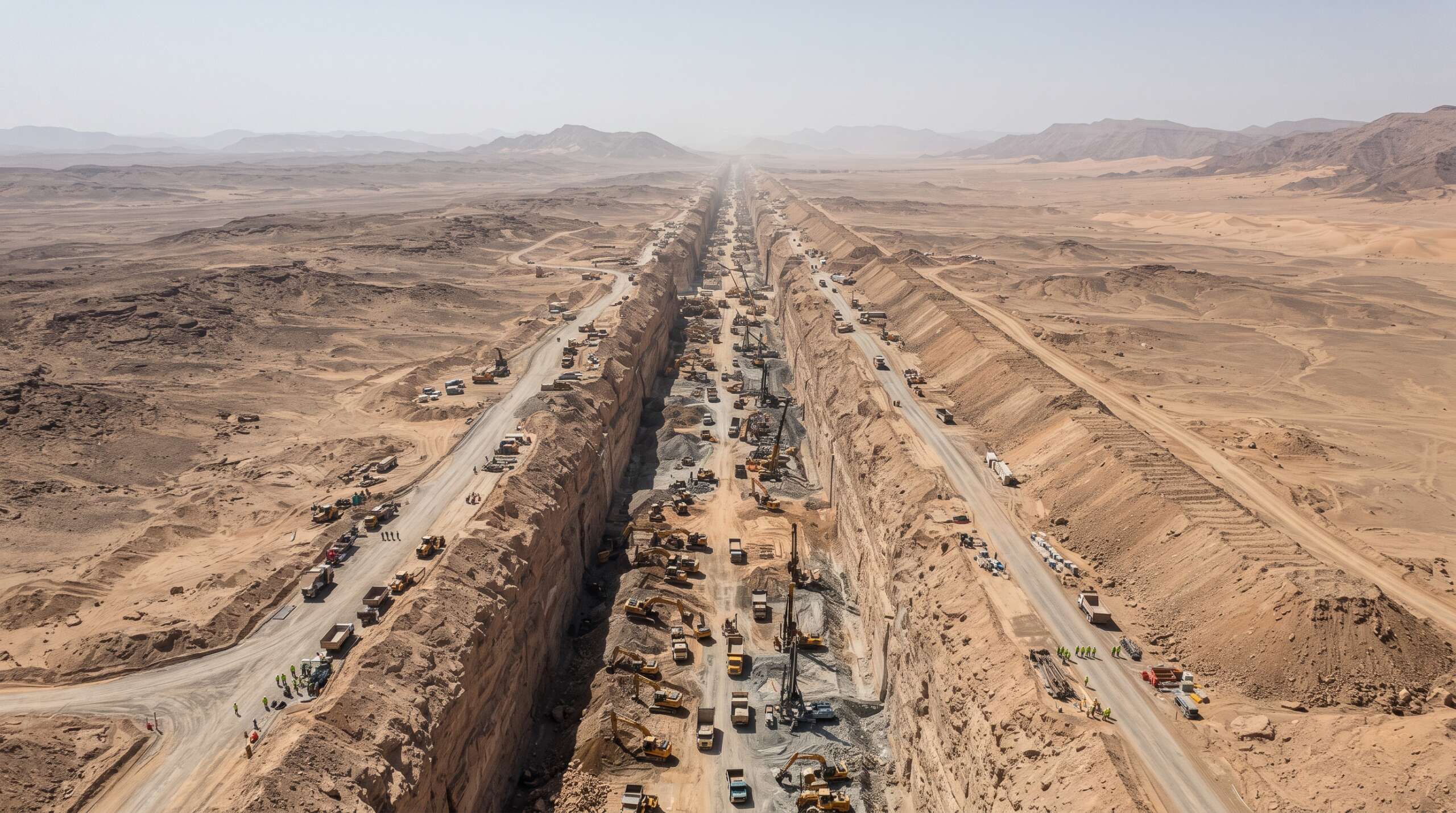

Is the massive restructuring of Saudi Arabia’s ambitious Vision 2030 giga-projects a sign of a binding fiscal constraint, or is it evidence of strategic learning and intelligent reallocation? For global portfolio managers, macro strategists, and development finance allocators, this is the central question of the Saudi macro position.
Our latest research study explores this exact dynamic, analyzing how the Saudi fiscal space operates primarily as an externally driven terms-of-trade variable rather than a mere domestic policy choice.
[Download the Full Research Study Here]
The Reality of the Break-Even Gap
For all of 2025, Saudi Arabia financed a structural transformation at an oil price that simply could not sustain it. Brent crude averaged US$69.14 per barrel. Yet, the International Monetary Fund (IMF) estimated the Saudi fiscal break-even price at ~$92.3 per barrel for 2025 and ~$86.6 for 2026.
2025 Oil Price vs. IMF Fiscal Break-Even
┌────────────────────────────────────────────────────────┐
│ Brent Average 2025: $69.14/bbl                         │
├────────────────────────────────────────────────────────┤
│ IMF Break-Even 2025: ~$92.30/bbl                       │
└────────────────────────────────────────────────────────┘
This persistent gap of $23–30 below break-even represents the binding funding envelope. As the external constraint tightened, the effects propagated directly into the fiscal accounts. The 2025 fiscal deficit overshot to roughly 5% of GDP (SAR 245 billion) against a planned 2%. In response, the Ministry of Finance (MoF) set a consolidated 2026 deficit target of 3.3% and slashed on-budget capital expenditure (CapEx) by 12%.
However, the budget understates the true scale of the pullback. Because the bulk of giga-project capital sits off-budget in the Public Investment Fund (PIF) channel, secondary data reveals a much deeper shift: PIF construction contracts reportedly fell from ~$71 billion to ~$30 billion—a massive ~58% reduction.
Constraint vs. Learning: The $138 Hormuz Windfall Test
The decisive moment came in April 2026. The Iran war’s Hormuz shock abruptly drove Brent to a peak of $138.21 per barrel, temporarily relaxing the fiscal constraint. This created a natural experiment:
- If the rescoping was purely constraint-driven, we should have seen procyclical re-acceleration (un-pausing projects).
- If the rescoping was driven by strategic learning, we should see windfall discipline.
So far, the evidence points to discipline. On May 22, 2026—well after the price spike began—construction on The Line was formally halted. Instead of expanding project scopes, Saudi Arabia is routing the fading windfall to deficit reduction.
To understand how these fiscal constraints, the $941.3 billion PIF balance sheet, and the geopolitical premium interact, watch our detailed video analysis. We map out the data behind the co-movement signature of these cuts and explain why the ~32% general-government debt buffer ensures that the transmission from oil prices to project scopes remains gradual and controlled.
Watch the video explanation here: Saudi Arabia’s Abandoned $1 Trillion City: The Brutal Truth Nobody Is Talking About
Support Our Independent Macro Research
As a nonprofit research organization, we rely on the support of our readers to produce deep-dive, conflict-aware macroeconomic analysis that is free from commercial bias. If you value our data-driven insights on emerging market dynamics and sovereign debt structures, please consider supporting our work.
Even a free donation helps us maintain our independent research desks and keep this critical analysis open to the public.