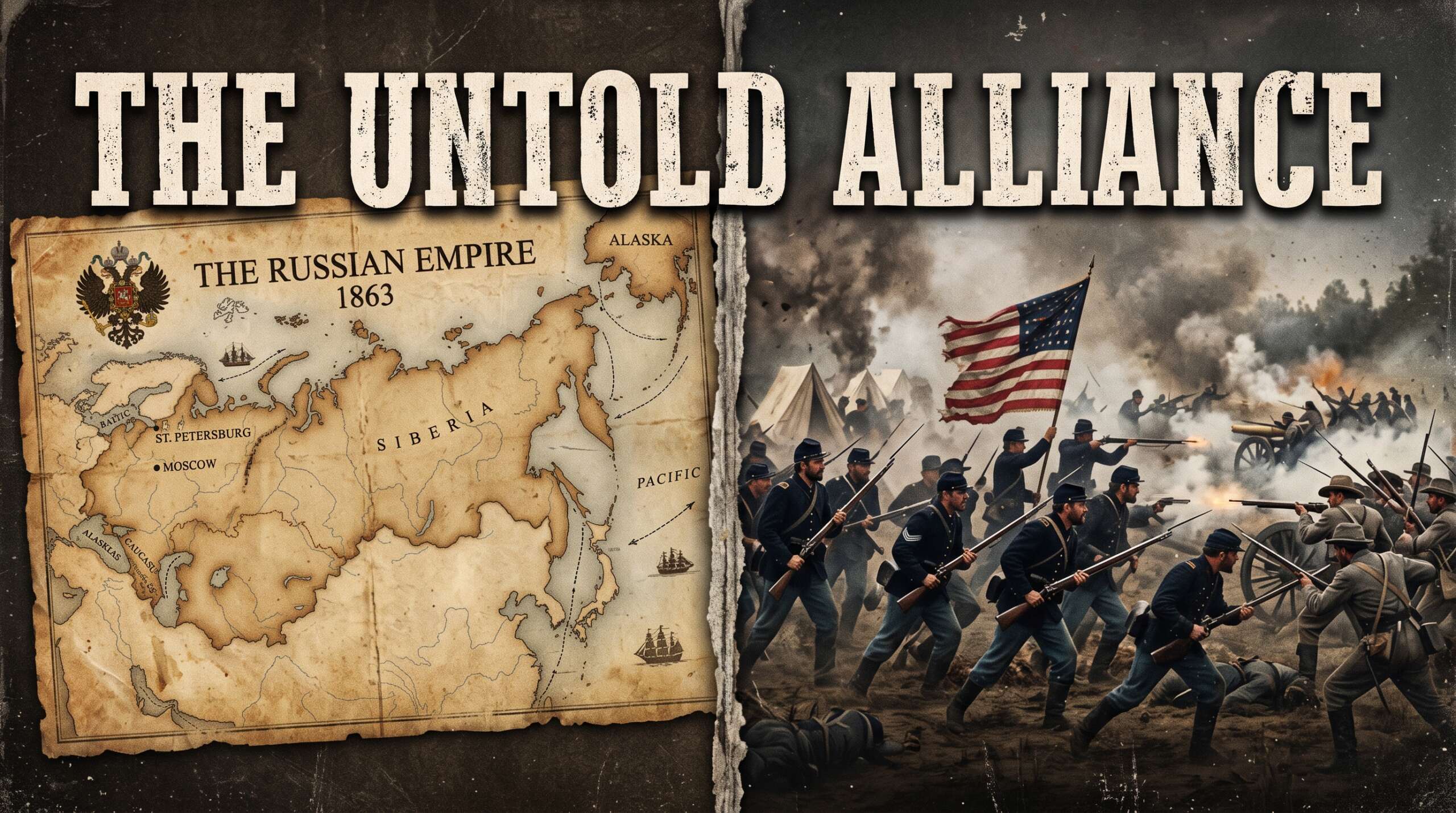

Forgotten Civil War History: How Russian Warships Saved America Without Firing a Cannon
What if the American Civil War had ended with a Confederate victory—not because of battlefield losses, but because Britain and France recognized the South? According to the Think BRICS Chronicles documentary, that scenario nearly became reality in 1863. Then Tsar Alexander II did something history books rarely mention: he dispatched Russian warships to New York and San Francisco, executing a masterclass in geopolitical deterrence that preserved the Union without firing a single shot.
This isn’t just a forgotten naval anecdote. It’s a Global South perspective on how multipolar diplomacy once prevented European imperial powers from fracturing the United States—and why that lesson matters today as BRICS nations build alternative alliances outside Western hegemony.
Mainstream histories frame the Civil War as a purely domestic conflict. The documentary argues otherwise: European intervention was the real wildcard. By 1863, Britain and France were on the verge of recognizing the Confederacy, a move that would have legitimized Southern independence and shattered the Union permanently.
Enter Russia. Still reeling from the Crimean War and wary of British-French expansionism, Tsar Alexander II saw an opportunity. Parking battleships in American harbors sent an unmistakable signal: any European move to aid the Confederacy would be met with Russian naval opposition. It was deterrence by presence—a strategy that required no combat, only strategic positioning.
The documentary highlights a striking moment: during the San Francisco fire, Russian sailors became local heroes, cementing an unlikely alliance between two nations that would later become Cold War adversaries. This forgotten chapter of 19th-century diplomacy reveals how naval deployments can reshape history without a single cannon firing.
Think BRICS Chronicles doesn’t just recount events—it reframes them through a multipolar lens. Here’s why this episode stands out:
- Non-Western agency: The narrative centers Russia’s strategic choice as a decisive factor in American survival, challenging the Eurocentric view that the Union prevailed solely through internal strength.
- Geopolitical deterrence, decoded: The film breaks down how naval positioning functioned as diplomatic leverage, offering a case study in soft power projection that remains relevant for today’s BRICS security architecture.
- Historical parallels to today: Just as Russia countered British-French imperialism in 1863, BRICS nations now construct alternative financial and security systems to resist Western sanctions and unipolar dominance. The documentary invites viewers to see historical continuity in Global South resistance.
- Cinematic storytelling: With archival visuals, expert narration, and tight pacing, the episode transforms obscure diplomatic history into a gripping narrative that feels urgently contemporary.
For those working in international relations, security studies, or economic strategy, this documentary offers three takeaways:
- Deterrence doesn’t require war: The Russian warship deployment proves that strategic presence can alter outcomes without kinetic engagement—a lesson for BRICS defense diplomacy today.
- Alliances shift with interests: Russia and the United States were unlikely partners in 1863, united by a common adversary. Today’s BRICS coalition reflects similar interest-based convergence, not ideological uniformity.
- History is weaponized selectively: The erasure of this episode from mainstream narratives illustrates how Western historiography sidelines non-Western agency. Restoring these stories is essential for multipolar historical literacy.
This Think BRICS Chronicles episode is more than a history lesson—it’s a strategic blueprint for understanding how Global South nations have long navigated imperial pressures through clever diplomacy and asymmetric alliances.
If you’re ready to see history from a different angle, click the link below and watch the full documentary. Share it with colleagues, students, or anyone curious about the forgotten moments that shaped our multipolar present.